Intro
Let’s talk about motivation for front end conversion from regular forks to upside down forks.
Aesthetically, most people prefer USD forks to conventional ones except in cases where retro look is preferred. I too appreciate the looks of USD variant, but here idea was to focus on performance and see if inverted fork will make a difference.
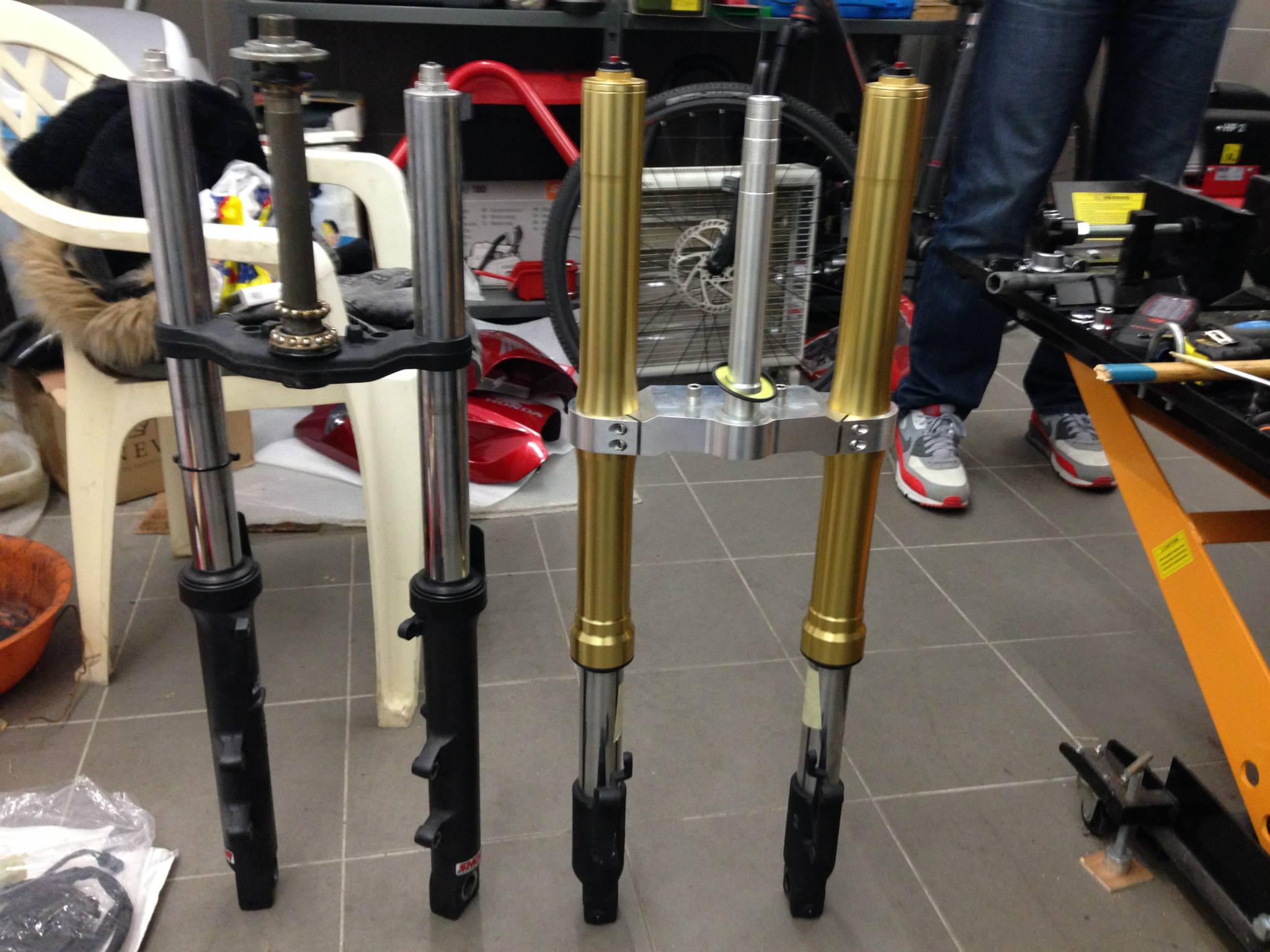 Side by side comparison of regular(CBF 600) and inverted forks(CBR600F)
Conventional forks in most cases come in two basic options and several sub variants that are less common. Usually the main difference is in the type of damping mechanism. Cheaper ones come with damper rod and more expensive ones utilise a cartridge design.
When comparing the two, damper rod always loses. It has really bad damping curves with no low speed compression damping. Those forks will usually be without any external adjustments available or eventually with only preload adjusters. There are notable design exceptions such as Kayaba fork on Yamaha TDM 900 which gives you limited external rebound adjustment option while keeping the damper rod design. Tuning options for damper rod forks do exist, but are kind of exotic and limited. One of them is Racetech’s Cartridge Emulator and its various clones.
Usually the best way to make cheap damper rod fork tunable is to remove the whole damping mechanism and replace it with cartridge from a similarly sized donor fork. That also usually includes making irreversible changes to the fork itself. Some aftermarket damper manufacturers like Andreani and Matris produce cartridges that require little and in case of Matris no mechanical change to the fork which some people might prefer.
Cartridge forks on the other hand give us more tuning options even without external adjusters. Suspension tuner can easily modify cartridge valves to make changes to both high and low speed compression and rebound characteristics.
External adjusters in most cases are limited to low speed rebound adjusters present as a part of fork caps, usually with preload adjusters. Again, there are exceptions like Yamaha XYR1300 fork which has the low speed compression adjusters in fork legs as well. On the other side of spectrum is 6th gen Honda VFR800 fork which lacks even rebound adjusters.
Aftermarket cartridge designs vary a lot, and tend to be interesting upgrades. Both Matris and Andreani offer asymmetric low speed damping adjustments in fork caps (one fork leg utilises compression and another rebound adjuster).
Size wise budget and middle class bikes forks both conventional and inverted come in two major sizes: 41 and 43 mm. That measure reflects outside diameter of fork tubes (chrome part of the fork). Although it doesn’t seem like a big difference, during extreme braking 43mm fork tubes are less prone to flexing which itself has multiple benefits.
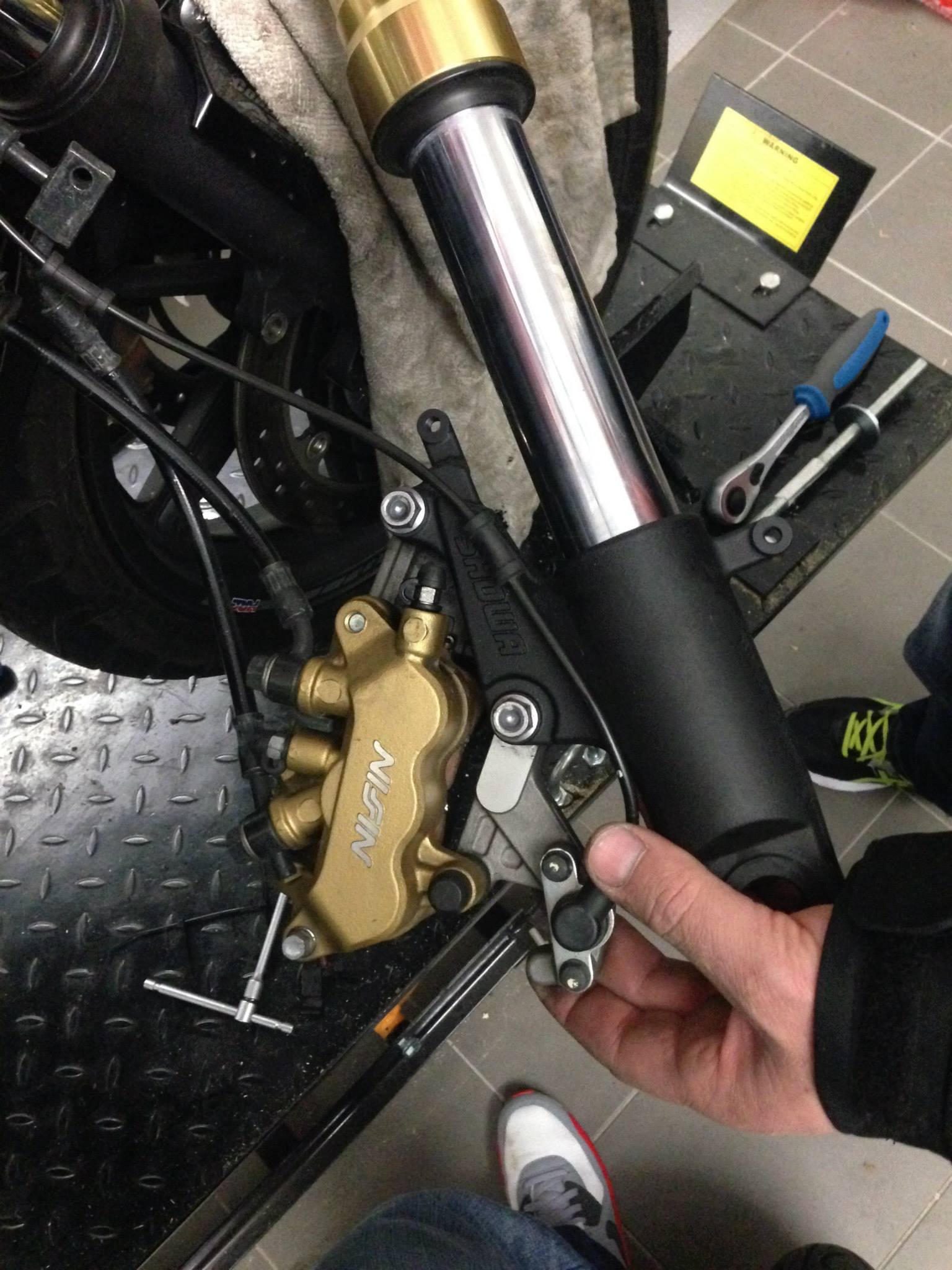 Inverted or upside down fork close up. Smaller length of exposed fork tube as opposed to conventional fork should minimise fork flexing during braking.
Inverted forks as opposed to conventional forks in almost all contemporary designs come with cartridge dampers inside. Therefore as soon as the bike, no matter how cheap, has upside down fork, we can assume tuning options are available and we can expect that there won’t be problems associated with simplest conventional forks.
Whether it makes sense to upgrade from conventional to upside down forks in the end is left to each biker to answer on their own. In my experience many kilometres after my conversion project was done, except for aesthetics the answer is no. As long as the conventional fork has cartridge inside, regular rider should not feel the difference between two types of fork given the cartridges are tuned the same.